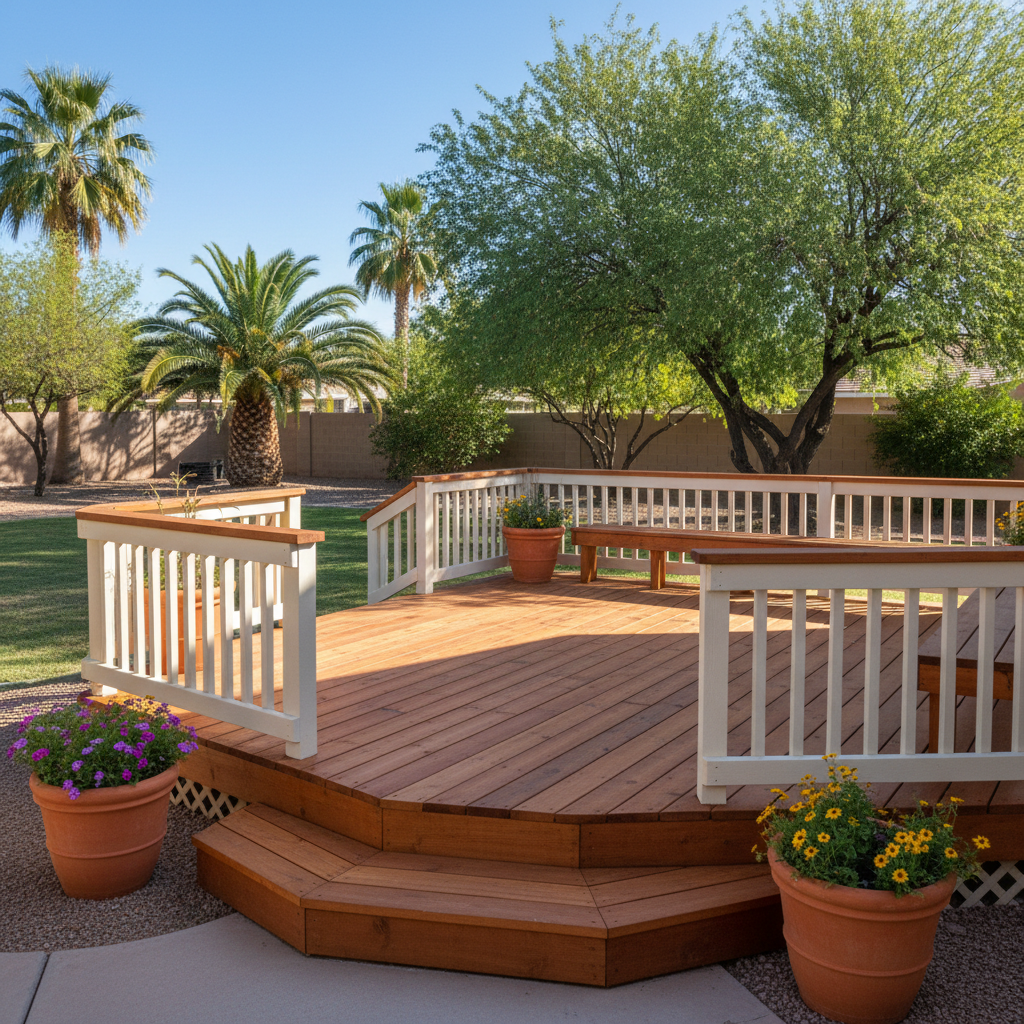
So, you're thinking about giving that deck of yours a fresh look? Painting or staining isn't just about slapping on a new color; it's a real project, you know? And like any good project, it needs a plan. As someone who's been doing this for a while here in Tempe, I've seen what works and, frankly, what doesn't. Let's break down what you need to know before you even think about picking up a can.
Timeline: When's the Best Time to Do This?
Timing is everything, especially here in Arizona. You absolutely do not want to be staining your deck in July when it's 115 degrees out. Trust me on this one. That kind of heat makes the product flash dry, leaving you with a patchy, uneven mess. Not ideal, right? The best times for deck painting or staining around here are usually late fall, winter, or early spring. Think October through April. The cooler temperatures and lower humidity let the product cure properly, giving you a much better, longer-lasting finish.
- Fall (Oct-Nov): Great weather, usually after the monsoon season has wrapped up.
- Winter (Dec-Feb): Temperatures are ideal, but keep an eye out for those occasional cold snaps that dip below what the product recommends for application.
- Spring (Mar-Apr): Still a good window, but you're definitely racing against the summer heat that's just around the corner.
Remember to factor in a few days for prep work, then the actual application, and finally, drying time. A typical project might take anywhere from 3 to 7 days from start to finish. That depends on your deck's size and the weather conditions, of course. Don't rush it. Rushing leads to mistakes and, let's face it, a job that just won't hold up to our Arizona sun.
What Happens During the Process?
Okay, you've got a timeline in mind. What's next? Here's a general rundown of what happens:
- Assessment & Quote: A pro will come out, check out your deck's condition, measure it, and talk through your options – paint versus stain, color choices, product types. Then you'll get a detailed quote.
- Scheduling: Once you give the green light, you'll pick a start date. Good contractors often have a bit of a waitlist, so don't expect them to show up tomorrow.
- Prep Work (Day 1-2): This is the most important part. It means really cleaning the deck. We're talking power washing, getting rid of old, peeling finishes, sanding down rough spots, and treating any mildew or mold. If your deck has a lot of old, flaking paint, this stage can take a while. The new product needs a clean, smooth surface to stick to.
- Repairs (If Needed): Any loose boards, popped nails, or minor wood rot? Those need fixing before anything new goes on.
- Application (Day 2-4): This is where it all comes together. Whether it's paint or stain, it'll typically go on in one or two coats. Railings, spindles, and those tricky spots get done by hand. Larger flat surfaces? Those might use rollers or sprayers.
- Drying & Curing: The deck will need time to dry before you can walk on it, and even longer to fully cure before you put furniture back or host a BBQ. Your contractor will give you the specific times.
Expect some noise from power washers and sanders. There will be equipment around, too. It's basically a construction zone for a few days, so plan accordingly for pets and kids.
How to Get Your Deck and Yard Ready
You can make the contractor's job easier, and your project smoother, by doing a little prep yourself:
- Clear the Deck: Move all your furniture, grills, planters, toys – everything – off the deck. Find a temporary spot for them.
- Clear the Area: Trim back any bushes or plants that are right up against the deck. This gives the crew room to work and helps prevent overspray.
- Protect Nearby Items: If you have something valuable or delicate right next to the deck that can't be moved, like a fancy fountain or a brand-new AC unit, point it out to the crew so they can cover it.
- Access: Make sure there's clear access to the deck, plus an outdoor water spigot and electrical outlet.
A little effort on your part goes a long way. It helps the crew be more efficient, and sometimes, that can even save you a bit on labor costs.
Questions to Ask Before Signing a Contract
Before you commit to anyone, you've got to ask the right questions. Don't be shy; this is your home and your money, after all. Here's what I'd want to know:
- What specific products will you use? Ask for brand names and product numbers. Do a little research on them. Make sure they're suitable for our extreme Tempe climate.
- What's your prep process? Get details. How will they clean, sand, and strip the old finish? This is where many jobs go wrong, honestly.
- How many coats will be applied? Usually, two coats are best for durability.
- What's the estimated timeline for completion? And what happens if weather delays it?
- Do you offer a warranty on your work? If so, what does it cover and for how long?
- Are you licensed and insured? Always, always ask for proof. For Ace Deck Solutions, we're fully licensed and insured, and we'll happily show you.
- Can you provide references? Talk to past clients. See their work if possible.
- What's included in the price? Get a detailed breakdown of labor, materials, and any other fees. No surprises, right?
- What's your payment schedule? Typically, it's a deposit upfront, then payments at certain milestones, and the final payment upon satisfactory completion.
Getting your deck painted or stained is a great way to protect your investment and boost your home's curb appeal. Do your homework, ask the tough questions, and you'll end up with a deck you'll love for years.